Seeing Red In Pixar’s Inside Out?

Any person or parent who as succumbed to the intoxicating delight of Pixar Animation Studio’s movies over the last decade must see Inside Out, this summer’s blockbuster. It’s fodder for ongoing conversations about kids, parenting, the brain, and our emotional lives.
Of the five inner voices swarming around in 11 year old Riley’s head — Joy, Sadness, Anger, Disgust and Fear — I just loved the red little guy! So much so, I saw Inside Out twice: Once with my BodiMojo co-workers (full review here) and once with my family.
The first time I was so attentive to the story line that I had to see it again to focus on the science of it. I realized because I was a temper tantrum kid that I wanted to see more of Anger, voiced by comedian Louis Black. Anger is a difficult emotion that can be appropriate at times (like when the main character, Riley, finds out she has to move away from the comfort of home and her BFFs). It’s also an important emotion in understanding the ups and downs of emotional life, stress, and what’s happening inside the brain. Drs. Dan Siegel and Tina Payne Bryson, co-authors of my favorite parenting book, The Whole Brain Child, have a simple representation of the brain that I love. It’s much simpler that the brain depicted in the movie! Dr. Siegel uses his hand as a model of the brain, which he divides in to the “upstairs brain” and the “downstairs brain.” Imagine your hand in a fist. The downstairs brain (the palm) is reactive and controls things like breathing and sleeping; it can get triggered and activate the fight, flight, freeze or faint response when angry or afraid.
The upstairs brain (the curled fingers in Dr. Siegel’s hand model) is the logical, rational brain that can make plans, problem solve, and instill reason and calm. That’s the PFC, the prefrontal cortex. It balances out the downstairs brain. In between is the baby gate, i.e., the thumb tucked inside the fist, which represents the amygdala, the tiny structure in the brain that is on constant alert for danger and helps to process emotion. When a kid “flips her lid” (hand is now wide open) it means the baby gate is locked and the passage between the upstairs and downstairs brain is disconnected. In Inside Out, the Sadness and Joy were locked out while the brain’s command central was going bonkers. That’s when Anger and the other sidekicks, Disgust and Fear, went into panic mode. (“There’s nothing working! Why isn’t it working?”) This triggered the stress reaction and motivated Riley into action, or a “flight” response. This is what Dr. Siegel might call an upstairs tantrum: she made a conscious decision to grab her mom’s credit card number, buy a bus ticket, and then run away.
Dr. Siegel’s Tedx Talk and his Handy Model of the Brain
I wanted to see a downstair tantrum in part because I use this language with some of my younger adolescent clients prone to emotional regulation challenges. Where was the downstairs fist-pounding, wailing meltdown? Plus, every kid loses it from time to time. I’ve found my daughter wailing inside her closet, too, with utter recognition of the experience. To see Riley do so would have been excruciatingly entertaining to be sure. Who couldn’t relate? It would also be instructive for viewers and half the screaming little kids in the theater with me.
How does one calm down when so upset?
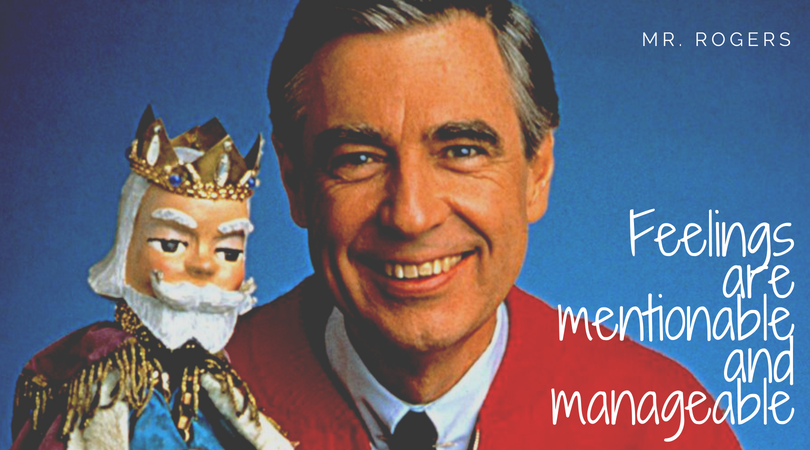
A rational conversation by mom or dad would not work well in the moment. After all, who can hear anything when one is in a meltdown? After the emotional release dies down, connecting with an understanding mom and dad certainly could. That might include naming the emotions and engaging in calming skills (breathing, a hug, and mindfulness) until the “baby gate” opens up to the upstairs brain. That’s when new learning (or integration) can take place. As Dr. Siegel says, kids need to know that their feelings are both “mentionable and manageable.”
All told, Anger, made me laugh in recognition. My 15 year old daughter, the consummate animation flick fan, quipped, “I can’t wait for Inside Out 2!” That’s when we hope the “puberty button” gets pushed! Let’s see what adventures Riley’s internal voices embark on in her morphing brain once she’s a teenager. And that’s when I imagine Disgust will reveal her true sassy self. (Dr. Siegel’s recent book Brainstorm: The Power and The Purpose of the Teenage Brain, is another excellent read.)
I recently saw Dr. Siegel demonstrate the hand model of the brain at a Mindfulness & Education Conference. On that day his sidekick was hip hop artist JustMe, who composed a song for kids, “Don’t Flip Yo’ Lid.” It was amusing to watch teachers and therapist jamming. Whatever it takes!
A movie, a song about the brain for kids? It works for this big kid.
Photo credit: © Pixar, 2015 http://movies.disney.com/inside-out/